Before filling glass bottles with skincare products, cosmetic brands should check bottle cleanliness, glass condition, formula compatibility, closure fit, dispensing performance, and leakage resistance. These checks help reduce contamination risks, filling-line interruptions, product waste, and packaging complaints after launch.
For cosmetic manufacturers and private label brands, a glass bottle is not ready for production simply because it looks good and has the correct capacity. The bottle, pump, dropper, cap, seal, and formula must work together under actual filling, storage, transportation, and consumer-use conditions.
Whether you are preparing a new serum, facial oil, lotion, or premium skincare collection, the following checklist explains what to inspect before filling and how to select suitable packaging from LISSON's cosmetic glass packaging collection.
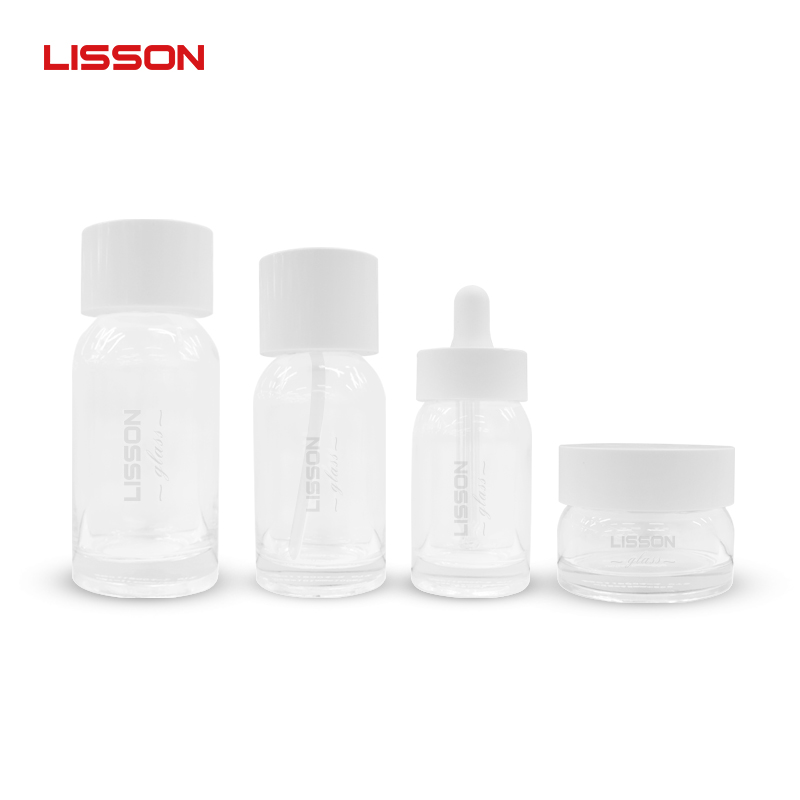
Why Should Cosmetic Glass Bottles Be Inspected Before Filling?
Pre-filling inspection checks whether packaging is suitable for the product and ready for the filling process. Finding a problem before filling is generally easier and less expensive than identifying it after the bottles contain finished cosmetics.
A bottle with a chipped rim may not seal properly. A pump that does not match the formula viscosity may dispense too slowly or stop working. Dust or foreign particles inside a bottle can also affect product quality, particularly for premium skincare products.
Brands should establish inspection requirements before mass production rather than relying only on a visual check at the end of the packaging process. The inspection should cover the glass container, closure components, formula compatibility, filling equipment, and finished-package performance.
Check the Glass Bottle for Cracks, Chips, and Surface Defects
The first step is to inspect the physical condition of the bottles. Pay particular attention to the bottle mouth, neck, shoulder, base, and other areas that may experience stress during handling or filling.
- Cracks and chips: Look for visible damage around the neck, rim, body, and base. Segregate damaged containers according to the inspection procedure.
- Bottle mouth: Check for irregularities that could affect cap installation, pump seating, or sealing performance.
- Glass thickness and shape: Compare the bottle against the approved sample and technical drawing where available.
- Surface finish: Check for scratches, unwanted marks, coating defects, or decoration damage outside the agreed specification.
- Stability: Confirm that the bottle stands securely on a flat surface when its design requires a stable base.
For premium skincare products, appearance matters, but functional defects deserve equal attention. A bottle that passes a visual review should still undergo the relevant closure and compatibility checks.
For new packaging projects, compare production samples with the approved reference before authorizing a bulk filling run. Explore cosmetic glass bottle and jar sets to compare coordinated packaging options for different skincare applications.
Confirm Bottle Cleanliness and the Required Hygiene Process
Glass bottles should be clean and free from visible foreign matter before filling. However, a bottle that looks clean is not necessarily microbiologically controlled or ready for a particular cosmetic production environment.
Brands should define the required cleaning, handling, and, where applicable, sanitization or sterilization procedures according to the cosmetic formula, packaging supplier's instructions, and the filling facility's quality system.
- Inspect the inside and outside of bottles for dust, glass fragments, fibers, and other visible contaminants.
- Protect inspected containers from recontamination during storage and transfer to the filling line.
- Use validated or appropriately verified cleaning procedures where required.
- Confirm that cleaning-agent or rinse-water residue will not affect the formula or packaging.
- Follow the filling facility's environmental and personnel hygiene requirements.
Not every glass bottle needs the same treatment. Some containers arrive ready for a specified use, while others may require additional preparation. Confirm the supplier's delivery condition before deciding whether further cleaning is necessary.
Test Whether the Glass Bottle Is Compatible with the Cosmetic Formula
Glass is widely used for skincare packaging, but the complete package includes more than the glass itself. The pump, dropper, cap liner, gasket, dip tube, and other product-contact components may be made from different materials. These components must be suitable for the specific formulation.
Before approving a package, provide the supplier with information about the formula's ingredients, viscosity, pH where relevant, essential oils, solvents, active ingredients, and expected storage conditions. This helps identify potential material or dispensing concerns that require testing.
For example, a facial oil may require different dispensing components from a water-based toner. A concentrated serum may also interact differently with a gasket or pump component than a conventional moisturizer.
- Changes in formula color, odor, appearance, or other relevant quality characteristics.
- Swelling, deformation, corrosion, or deterioration of product-contact components.
- Changes in sealing performance, leakage, or dispensing behavior.
- Potential interactions between the formula and coatings, liners, seals, or closures.
- Stability under the intended storage conditions and product shelf life.
Compatibility testing should use the actual formula and intended packaging configuration whenever practical. Accelerated studies may provide useful early indications, but they do not automatically replace an appropriate shelf-life and stability assessment.
Brands sourcing coordinated packaging can review the luxury clear glass cosmetic bottle and jar set to compare bottle and cream jar formats for different skincare products. Final suitability should still be confirmed through formula-specific testing.
Check Bottle Capacity, Neck Finish, and Closure Dimensions
A bottle's nominal capacity does not tell you everything needed for filling. Brands also need to consider usable filling volume, headspace, bottle dimensions, neck finish, closure fit, and filling equipment requirements.
Before production, compare the approved packaging specifications with the actual containers and closures. A cap or pump that looks compatible may still have an incorrect thread, seating surface, or dimensional tolerance.
- Capacity and fill volume: Establish the intended fill quantity and confirm that the bottle can accommodate it with suitable headspace.
- Neck finish: Verify the neck dimensions and finish against the specified closure.
- Closure fit: Confirm that the cap, pump, or dropper seats correctly without cross-threading or excessive force.
- Sealing components: Check that liners, gaskets, and seals are correctly positioned where applicable.
- Filling-line compatibility: Confirm that bottle dimensions and shape work with filling, conveying, capping, and labeling equipment.
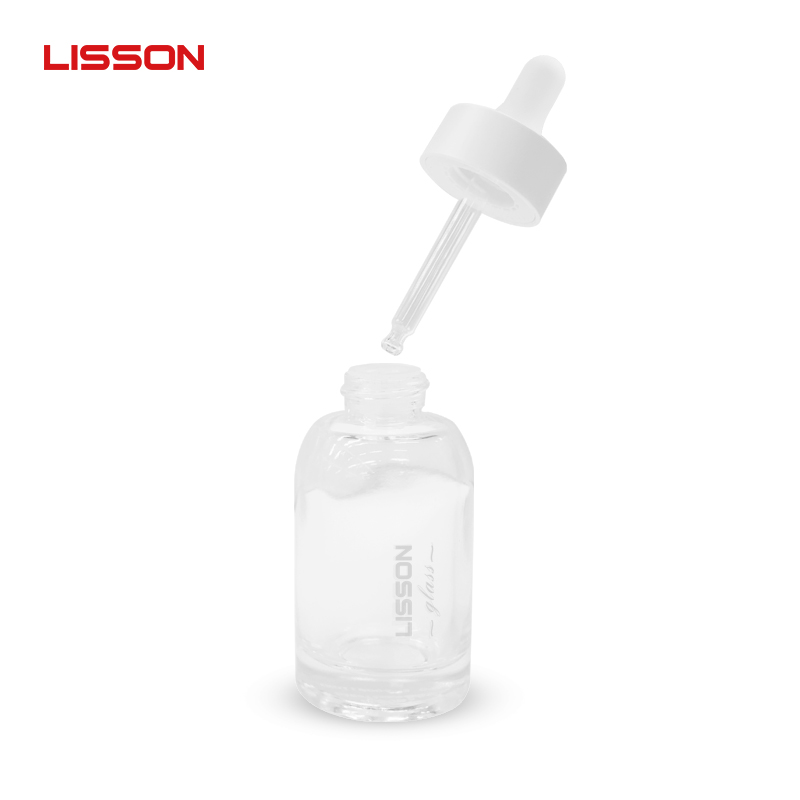
A dropper bottle for facial serum needs a compatible bottle neck, dropper assembly, and pipette length. A lotion bottle needs a pump that fits securely and draws the formula effectively.
Brands considering different dispensing formats can explore the glass dropper bottle collection before finalizing the bottle and closure combination.
Choose the Right Pump, Dropper, or Spray System
The dispensing system directly affects how consumers use a cosmetic product. Before filling, check whether the selected pump, dropper, or sprayer is suitable for the formula's viscosity and intended application.
- Facial serums and facial oils: A suitable glass dropper bottle can support controlled dispensing when the pipette and dropper assembly work with the formula.
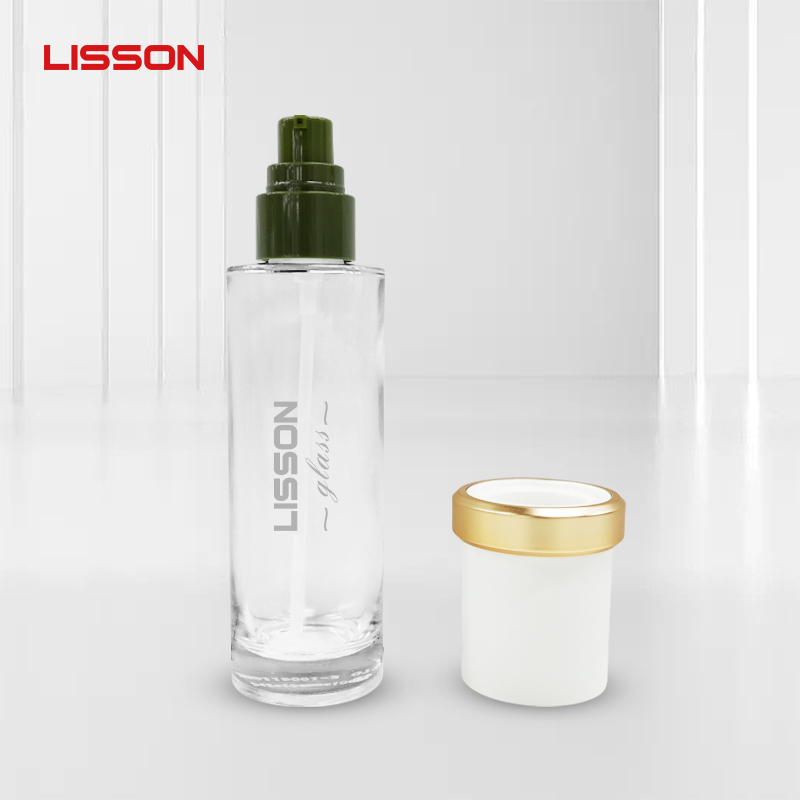
- Lotions and fluid moisturizers: A lotion pump should deliver a consistent amount without excessive force, leakage, or repeated priming problems.
- Toners and facial mists: A spray system should produce the intended spray pattern and operate consistently with the formula.
- Thicker creams and balms: Depending on viscosity and package design, a wide-mouth jar may be more practical than a conventional pump bottle.
During testing, check the initial priming process, output per actuation where relevant, dispensing consistency, leakage after use, and the amount of product left inside the container. For spray products, also evaluate the spray pattern and nozzle performance.
Do not select a pump based on appearance alone. A visually attractive component can still perform poorly if viscosity, dip tube length, internal mechanism, or output specification does not match the formula.
Evaluate Leakage Resistance Before Mass Production
Leakage testing helps determine whether the complete package can contain the formula under expected conditions. It is particularly important for products shipped internationally, stored in different orientations, or sold through e-commerce channels.
A practical pre-production test should use the actual bottle, closure, seal, and formula or an appropriate test liquid where justified. The test method should reflect the risks associated with the product and distribution process.
- Inspect the bottle mouth and closure for visible gaps or incorrect seating.
- Check that caps and pumps are tightened or secured according to the specified process.
- Evaluate leakage in the intended storage orientation and other relevant orientations.
- Assess whether temperature changes or transportation conditions could affect sealing performance.
- Inspect for formula residue around the neck, pump, cap, or external bottle surface after testing.
For products shipped by air, sea, or courier, include appropriate packaging and transportation evaluations. A package that does not leak during a short bench test may still need further testing under actual distribution conditions.
Acceptance criteria should be agreed in advance. Avoid relying on an undefined claim that a bottle is completely leakproof without specifying test conditions and performance requirements.
Check Light Protection and Product Storage Requirements
Some cosmetic ingredients are sensitive to light, oxygen, heat, or moisture. The glass color, closure design, and overall package configuration should reflect the formulation's stability requirements.
Clear glass allows consumers to see the product, which can be useful for visually distinctive formulas. Amber, coated, frosted, or other colored glass may be appropriate when a formula requires additional protection from light. Actual protection depends on the material, color, coating, and relevant wavelengths, so it should not be assumed from appearance alone.
- Determine whether the formula requires protection from UV or visible light.
- Confirm whether the selected glass color or coating provides the required level of protection.
- Check whether the closure limits unwanted air exchange or evaporation where necessary.
- Verify that the package remains suitable under the intended storage conditions.
- Confirm that product stability testing supports the proposed packaging configuration.
For brands developing a complete skincare collection, the skincare glass bottles and jars packaging set offers coordinated packaging formats. The appropriate color, closure, and decoration should be selected according to the formula and product requirements.
Verify Filling-Line Performance with a Trial Run
Even when individual bottles pass inspection, packaging may behave differently once it enters a production line. A trial run helps identify handling, filling, capping, and labeling issues before the brand commits to a full production batch.
- Bottle handling: Confirm that containers move through the line without excessive vibration, tipping, or collision.
- Filling accuracy: Verify that the filling system consistently delivers the specified quantity within the approved tolerance.
- Foaming and splashing: Adjust the filling process if the formula creates excessive foam, spills, or residue around the neck.
- Capping performance: Check that closures are installed consistently and meet the agreed sealing requirements.
- Labeling and decoration: Confirm that labels, printing, and other decorative elements remain correctly positioned and undamaged.
- Finished-package inspection: Check for visible contamination, external residue, incorrect fill levels, and other defined defects.
Trial-run results should be documented. If adjustments are needed, repeat the relevant checks after making changes to the bottle, closure, filling settings, or production process.
What Should Brands Confirm with a Glass Bottle Supplier?
Clear communication with the packaging supplier helps prevent misunderstandings between sample approval and bulk production. Before filling begins, confirm that both parties are working from the same approved packaging specifications.
- Approved bottle model, capacity, dimensions, and glass color.
- Applicable quality standards and acceptance criteria for visible defects.
- Required cleanliness condition and responsibility for any additional preparation.
- Compatibility of the formula with the glass and all product-contact components.
- Pump, dropper, spray, cap, liner, and sealing specifications.
- Sample availability and the process for approving pre-production samples.
- Customization details, including logo printing, coating, frosting, and other finishes.
- Packaging protection for storage, handling, and transportation.
- Inspection procedures, batch consistency requirements, and handling of nonconforming products.
For customized packaging projects, share formula requirements, intended capacity, closure preferences, target order quantity, and design references as early as possible. This allows the supplier to assess the project more accurately before production decisions are finalized.
LISSON offers cosmetic glass packaging options for beauty brands. Review the glass bottle set for cosmetic use or contact the team through the website to discuss packaging requirements, samples, and customization possibilities.
Frequently Asked Questions About Filling Cosmetic Glass Bottles
What should be checked before filling cosmetic glass bottles?
Check the bottle for cracks, chips, and visible contamination; verify dimensions and closure fit; confirm formula compatibility; test dispensing and leakage performance; and ensure that the filling line is suitable for the package. The exact checks depend on the formula and production requirements.
Do glass cosmetic bottles need to be sterilized before filling?
Not every cosmetic glass bottle requires sterilization. The required cleaning or microbiological control process depends on the formula, packaging supply condition, manufacturing environment, and applicable quality requirements. Follow a documented procedure rather than assuming all bottles need identical treatment.
How can brands check whether a glass bottle is compatible with a skincare formula?
Test the actual formula in the intended packaging configuration. Evaluate changes in the formula, deterioration of product-contact components, dispensing performance, leakage, and stability under relevant storage conditions. Testing should cover the glass container and the complete closure system.
How can cosmetic brands prevent glass bottle leakage?
Match the bottle neck and closure dimensions, inspect sealing components, apply the specified capping process, and conduct leakage tests using the intended package configuration. Transportation and temperature conditions should also be considered when relevant.
Which glass bottle is suitable for a facial serum?
A glass dropper bottle is a common option for liquid serums and facial oils when controlled dispensing is required. A pump bottle may be more appropriate for some formulations. The final selection depends on viscosity, ingredients, dosing needs, light sensitivity, and compatibility with the dispensing components.
Should cosmetic brands test packaging samples before placing a bulk order?
Yes. Pre-production samples allow brands to evaluate formula compatibility, closure fit, dispensing performance, appearance, and filling-line behavior before committing to mass production. Approve the final configuration against documented requirements.
Prepare Your Cosmetic Glass Packaging for Reliable Filling
Successful cosmetic filling begins before the formula enters the bottle. Glass quality, cleanliness, component compatibility, closure performance, light protection, and filling-line suitability all influence the quality of the finished package.
The most reliable approach is to define inspection criteria early, test representative samples with the actual formula, and document approval before mass production. This reduces avoidable production issues and helps maintain consistency between packaging samples and finished products.
If you are sourcing glass bottles for a new skincare or beauty line, explore LISSON's cosmetic glass packaging range to compare available formats. Discuss formula, closure, and customization requirements with the supplier before confirming bulk production.