When a cosmetic bottle neck does not match the pump, the packaging may leak, loosen during transport, dispense inconsistently, or fail to close properly. Even if the glass bottle and pump look compatible, a difference in neck diameter, thread design, or closure dimensions can prevent them from forming a secure connection.
For skincare brands, cosmetic packaging distributors, and private-label manufacturers, the solution is to verify the bottle neck finish and pump specifications before mass production. LISSON provides glass lotion bottles with pump options and customized packaging solutions, helping brands evaluate bottle design and dispensing components as a complete system.
What Happens When a Cosmetic Bottle Neck Does Not Match the Pump?
A cosmetic bottle neck and pump that do not fit correctly can create several practical problems. The exact result depends on the type of mismatch and the pump design.
- Product leakage: The closure may not create a reliable seal, allowing lotion, serum, or other formulas to escape during storage or shipping.
- Loose or unstable pump: The pump may wobble, sit unevenly, or fail to remain securely attached to the bottle.
- Difficulty installing the pump: A mismatched thread or closure dimension may prevent the pump from engaging correctly with the bottle neck.
- Inconsistent dispensing: If the pump assembly is not seated correctly, the dip tube or sealing components may not function as intended.
- Packaging line delays: Poor component compatibility can lead to rejected bottles, additional inspection, rework, and production downtime.
One important distinction is that a bottle neck mismatch does not automatically mean the pump mechanism itself is defective. A pump can work correctly with its intended bottle but fail when fitted to an incompatible container.
For this reason, brands should inspect the bottle finish, pump closure, and assembled packaging together rather than replacing the pump immediately.
Why Bottle Neck and Pump Compatibility Matters
The bottle neck is the interface between the container and its closure. Depending on the packaging design, compatibility may involve the neck's outer diameter, thread profile, neck height, sealing surface, and the dimensions of the pump's closure.
Several specifications need to be considered during selection:
- Neck diameter: The pump closure must be designed for the bottle's specified neck dimensions.
- Thread specification: For threaded closures, the thread profile, pitch, and engagement must be compatible.
- Sealing surface: The gasket, liner, or other sealing feature must contact the intended surface correctly.
- Closure height and geometry: The pump collar should sit properly on the bottle without abnormal gaps or interference.
- Dip tube length: The tube should suit the bottle's internal depth and shape so the pump can draw product effectively.
For example, two pumps may look almost identical but use different neck finishes. A pump that screws onto one glass bottle may not seal correctly on another, even if both containers have a similar capacity and appearance.
Brands developing custom glass cosmetic bottles should therefore confirm the technical specifications before approving the packaging design.
How to Identify a Bottle Neck and Pump Mismatch
Before changing a component, check how the pump fits the bottle and whether the problem occurs consistently across samples.
Check the fit first. The pump should sit evenly on the neck and engage according to its intended closure design. Do not force a pump onto a bottle if the threads resist or the components appear misaligned.
Inspect the closure. Look for visible gaps, cross-threading, an uneven collar, damaged threads, or a sealing component that is missing or incorrectly positioned.
Check for leakage. Test the assembled packaging with the intended formula or an appropriate test liquid, following the product's compatibility and quality procedures. Inspect the closure and bottle exterior after the test.
Test dispensing. Confirm that the pump primes correctly and dispenses consistently. If the pump fits securely but does not draw product, investigate the dip tube, pump mechanism, formula viscosity, and assembly process as well.
Compare multiple samples. If several bottles show the same problem, review the component specifications and assembly method. If only one unit is affected, inspect that unit for a localized defect or assembly error.
A visual check is useful, but it cannot confirm every critical dimension. For commercial production, measurements, component drawings, samples, and appropriate fit and leakage tests provide stronger evidence of compatibility.
How to Choose the Correct Pump for a Glass Cosmetic Bottle
The correct pump is not simply the one that fits the bottle opening. It must also work with the cosmetic formula, dispensing requirements, and intended packaging application.
Start by identifying the bottle's neck finish and the pump closure specification. Ask the supplier for technical drawings or written specifications rather than relying on a visual comparison or a general description such as “standard pump.”
Next, consider the formula. A lightweight serum, a facial lotion, and a thicker liquid foundation may require different pump outputs or dispensing mechanisms. A neck-compatible pump can still perform poorly if it is not suitable for the formula's viscosity.
Also consider the required dose per press, dip tube length, closure material, and any relevant formula compatibility requirements. If the packaging will be shipped internationally, include transport and leakage testing in the validation process.
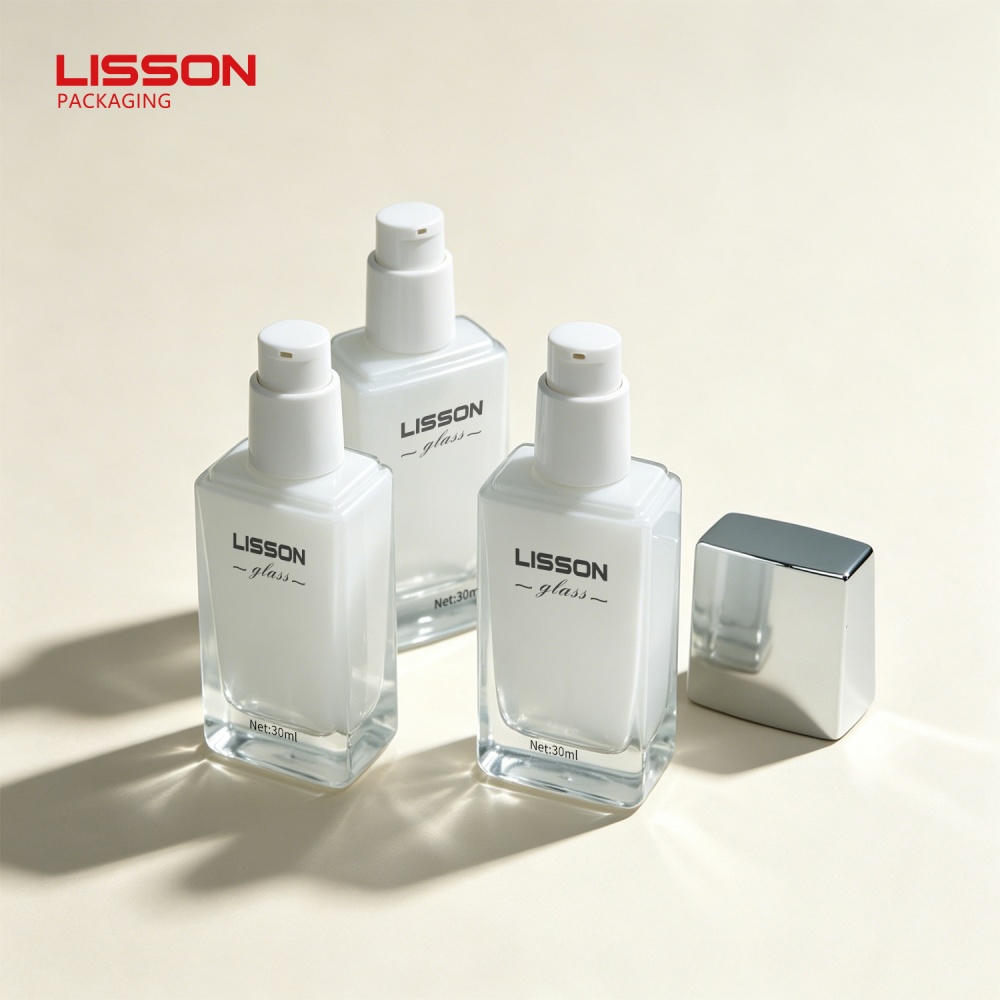
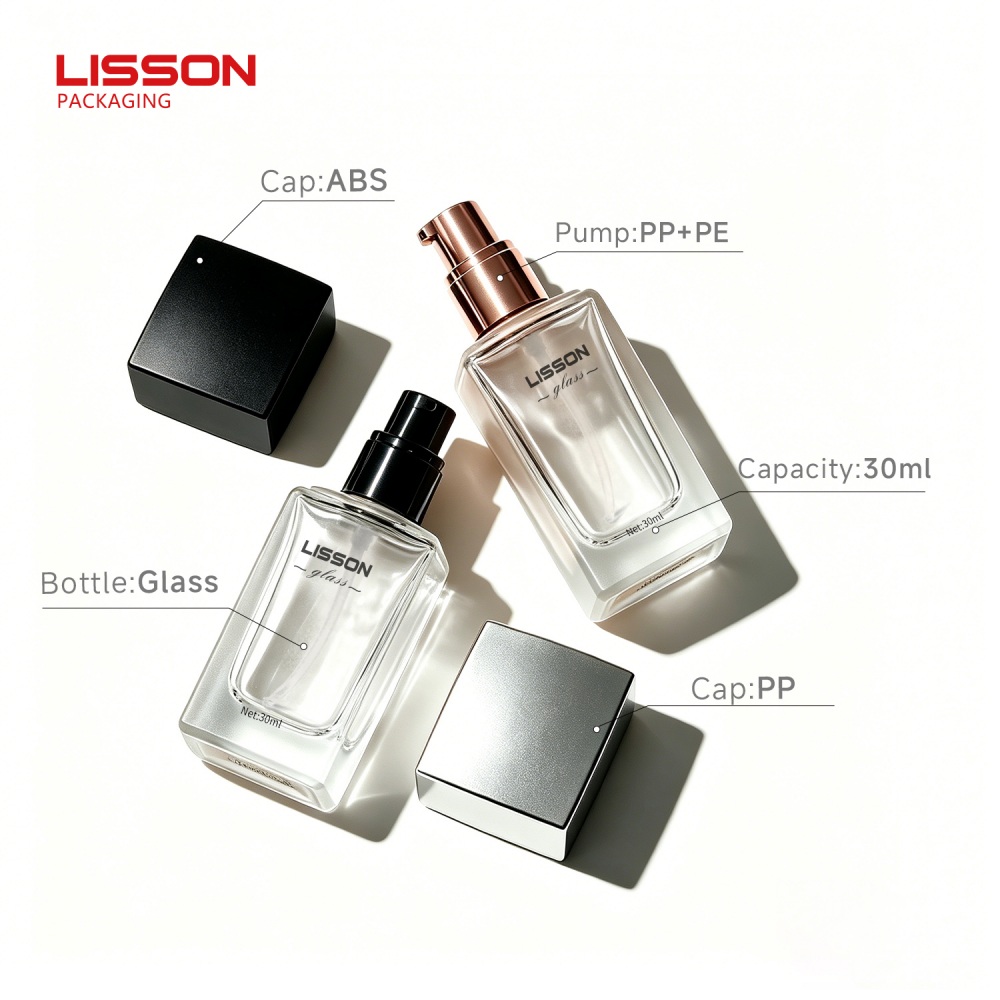
For example, LISSON's 30ml flat-square glass lotion bottle is listed with an 18mm pump system. That specification belongs to this particular product configuration; it should not be assumed to fit every bottle described as a 30ml glass cosmetic bottle.
Confirm the exact bottle and pump combination with the supplier before placing a bulk order.
Can You Use a Different Pump Without Changing the Bottle?
Yes, in some cases. If the existing bottle neck is suitable and another pump is available with the correct closure specification, changing the pump may be simpler than redesigning the bottle. However, the alternative must be verified rather than selected by appearance alone.
If no suitable pump is available for the existing neck finish, the project team may need to consider a different bottle, a compatible closure design, or a revised neck specification for a new packaging development.
Before making a change, compare the following:
- Whether the replacement pump matches the existing neck finish.
- Whether the pump's sealing system works with the bottle.
- Whether the dip tube length and pump output suit the formula and bottle dimensions.
- Whether the new assembly can run on the filling and capping equipment.
- Whether samples pass the required dispensing, leakage, and transport checks.
When a project requires coordinated bottle, pump, and cap development, LISSON's custom glass packaging service can be considered for reviewing bottle dimensions, closure options, decoration, and component compatibility during packaging development.
How to Prevent Compatibility Problems Before Mass Production
The most cost-effective time to resolve a bottle neck mismatch is before the packaging order enters mass production. A simple compatibility checklist can help purchasing, product development, and quality teams work from the same specifications.
- Confirm technical drawings: Obtain the bottle neck finish and pump closure specifications, including relevant dimensions and tolerances.
- Approve a physical sample: Check the actual bottle and pump combination instead of approving each component separately.
- Test the intended formula: Evaluate priming, dispensing, leakage, and formula compatibility under appropriate conditions.
- Validate filling and capping: Confirm that the assembled package works with the planned production process.
- Document the approved combination: Record the bottle model, pump model, closure specification, and sample approval to reduce the risk of unintended substitutions.
- Recheck changes: If a supplier changes the bottle, pump, or closure, assess whether new compatibility testing is required.
These steps are especially useful for private-label skincare brands and distributors sourcing packaging from multiple suppliers. A bottle and pump may each meet their individual specifications but still fail as an assembled unit if their interfaces have not been matched.
What Should You Send a Supplier When Requesting a Matching Pump?
To help a packaging supplier identify a suitable pump, provide as much of the following information as possible:
- The bottle model or a clear photo of the bottle and neck.
- The neck finish specification or technical drawing, if available.
- The desired pump style and closure appearance.
- The formula type and approximate viscosity.
- The required dispensing dose and bottle capacity.
- The expected order quantity and filling process.
- Any leakage, transport, or formula compatibility requirements.
If you already have a bottle but are unsure which pump fits, send the bottle sample or its technical drawing for review. If you are developing new packaging, it is usually more efficient to assess the bottle and dispensing system together before confirming the final design.
For brands looking for coordinated glass bottles and dispensing components, LISSON offers glass lotion bottle packaging options for skincare and cosmetic applications. Confirm the specific neck finish, pump configuration, and sample performance with the supplier before production.
Frequently Asked Questions
What happens if a cosmetic bottle neck is too large for the pump?
If the neck and closure are incompatible, the pump may not secure properly or create an effective seal. This can cause looseness or leakage. The correct solution is to verify the neck finish and use a compatible closure.
Can a pump fit a bottle but still leak?
Yes. A pump may appear to fit while the thread engagement, sealing surface, gasket, or closure dimensions remain incompatible. Leakage testing is necessary to confirm the assembled package performs correctly.
Are all cosmetic bottle pumps interchangeable?
No. Cosmetic pumps differ in neck finish, closure dimensions, dispensing output, dip tube design, and formula suitability. Compatibility should be confirmed for the specific bottle and pump combination.
How do I find the correct pump size for a glass cosmetic bottle?
Check the bottle's neck finish specification and compare it with the pump's closure drawing. Do not rely only on bottle capacity or the pump's appearance. Ask the supplier to confirm the fit and test samples before bulk production.
Should I replace the bottle or the pump if they do not match?
It depends on which component can be changed most practically. If a compatible pump is available, replacing the pump may be sufficient. If not, a different bottle or a revised packaging design may be required. Test the complete assembly before approving the change.
What should be tested before ordering cosmetic bottles in bulk?
At minimum, confirm dimensional compatibility, closure security, dispensing performance, leakage resistance, formula compatibility, and suitability for the filling and transport process. The exact test plan depends on the formula and packaging application.
Can LISSON help with custom glass bottles and matching pumps?
LISSON offers custom glass cosmetic packaging and dispensing component options. Share your bottle specifications, formula requirements, pump preference, and target quantity so the packaging combination can be reviewed for your project.