Cosmetic brands test bottle and closure compatibility by checking whether the cap, pump, dropper, or spray assembly fits securely, seals reliably, and remains functional when used with the actual cosmetic formula. The most important checks include dimensional inspection, closure fit, leakage testing, opening and closing performance, formula compatibility, and transport simulation.
A bottle and its closure may look like a perfect match but still fail during filling, storage, or shipping. Small differences in neck dimensions, thread design, liner placement, or closure tolerances can cause leakage, loose caps, damaged components, or inconsistent dispensing.
For cosmetic brands, private-label manufacturers, and packaging distributors, compatibility testing should take place before approving mass production. LISSON provides custom glass cosmetic packaging and closure solutions, including coordinated bottles, caps, pumps, and other dispensing components for beauty brands.
Why Is Bottle and Closure Compatibility Testing Important?
Bottle and closure compatibility testing helps confirm that packaging components work together as a complete system. It reduces the risk of leakage, product contamination, dispensing failures, and packaging defects after production begins.
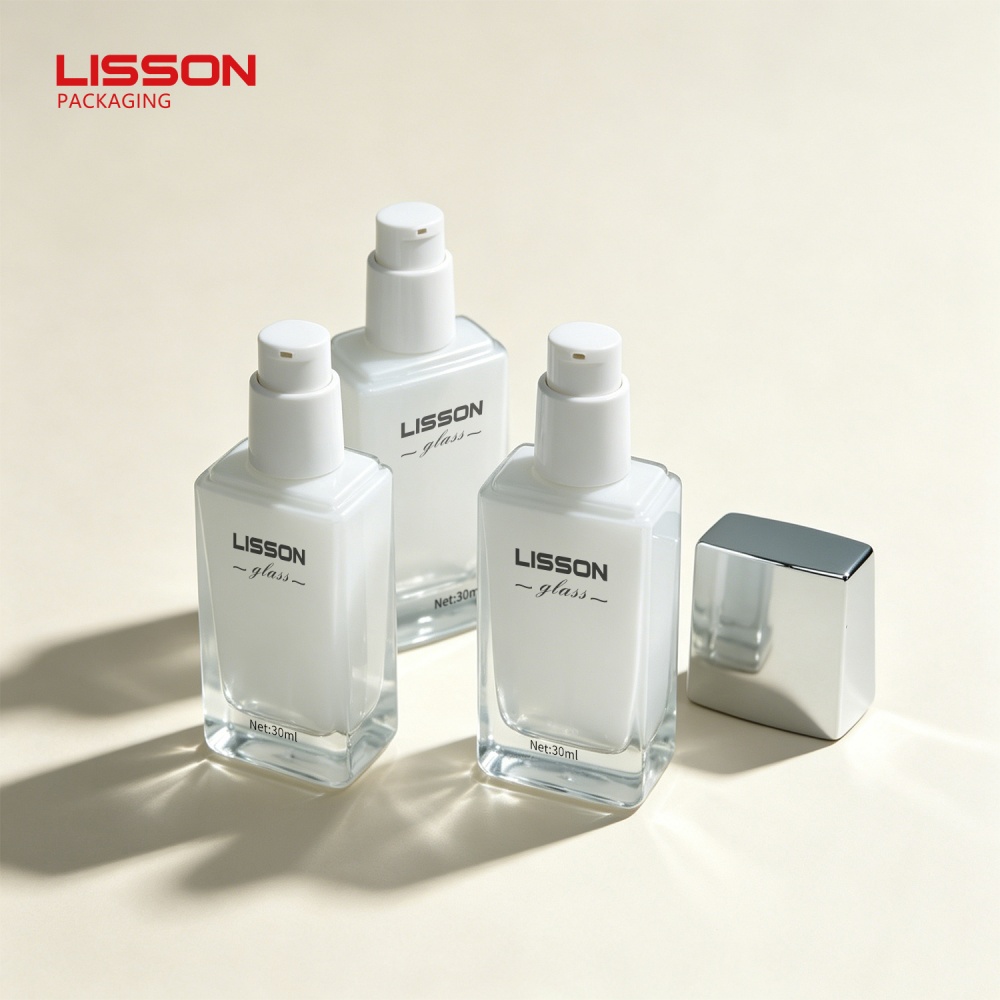
For example, a glass lotion bottle may have the correct capacity and appearance, but an incompatible pump closure can sit unevenly or fail to seal. Similarly, a dropper cap may screw onto a bottle but still provide an unreliable seal if the neck finish, insert, or sealing surface is unsuitable.
Compatibility testing is especially important when:
- A brand introduces a new bottle, cap, pump, or dropper design.
- A packaging supplier changes a component or manufacturing specification.
- A cosmetic formula changes in viscosity, composition, or chemical properties.
- A product will be shipped over long distances or exposed to temperature changes.
- A packaging project moves from sample approval to automated filling and mass production.
Testing early gives the brand an opportunity to correct dimensional or functional issues before they affect a large production batch. It also helps the purchasing, product development, and quality teams approve the same packaging configuration.
What Should Brands Check Before Testing a Bottle and Closure?
Before performing physical tests, brands should confirm the basic specifications of the bottle and its intended closure. This includes the bottle neck finish, dimensions, thread design, closure material, sealing structure, and intended application.
For threaded closures, check the relevant neck and closure dimensions, thread engagement, and sealing surface. For pumps and droppers, also confirm that the dispensing assembly is designed for the bottle's neck finish and internal geometry.
The initial inspection should cover:
- Neck finish: Verify the bottle opening, thread profile, and other specified dimensions.
- Closure dimensions: Confirm that the cap, pump, or dropper matches the intended neck finish.
- Sealing components: Check the gasket, liner, plug, or other sealing feature where applicable.
- Material compatibility: Identify the materials that will contact the formula, including glass, plastics, elastomers, coatings, and liners.
- Intended use: Record the formula type, storage conditions, filling process, and transport requirements.
Do not assume that closures are interchangeable simply because they have a similar appearance or nominal size. The actual dimensions and sealing design must be compatible.
For projects requiring coordinated bottle and closure development, LISSON's glass cosmetic bottle range provides a starting point for comparing bottle styles and packaging configurations.
How Do Brands Test Bottle Neck and Closure Fit?
The first physical test is to check whether the closure fits the bottle correctly. The closure should engage as designed, sit in the intended position, and avoid abnormal looseness, resistance, or visible gaps.
For a screw cap or threaded pump, inspect the engagement while assembling the components according to the supplier's instructions. A closure that cross-threads, binds, or stops in an incorrect position may indicate a dimensional mismatch or an assembly issue.
For a snap-on or press-fit closure, check that the component engages securely and can be removed as intended without damage. For a dropper assembly, inspect the fit of the cap, insert, bulb, and any sealing elements.
During fit evaluation, record:
- Whether the closure assembles smoothly and consistently.
- Whether the cap or pump sits evenly on the bottle neck.
- Whether there are visible gaps, misalignment, or abnormal movement.
- Whether repeated opening and closing changes the fit.
- Whether the bottle neck or closure shows damage after assembly.
For production use, dimensional measurements should be compared with approved drawings and tolerances. A sample that appears to fit is useful for preliminary screening, but it does not replace dimensional verification when critical tolerances are involved.
How Do Cosmetic Brands Perform Leakage Tests?
Leakage testing checks whether the assembled package can retain the intended formula under defined conditions. It is one of the most important tests for products that will be transported, stored, or sold through retail and e-commerce channels.
A practical leakage test begins with a representative bottle and its intended closure. The package is assembled using the specified process and filled with the actual formula or a suitable test medium, depending on the purpose of the test.
Brands may evaluate leakage under several conditions:
- Upright storage: Check the closure and bottle for visible leakage during the defined holding period.
- Sideways or inverted storage: Where relevant to the product and package design, assess whether the seal remains effective in different orientations.
- Pressure or vacuum testing: Use a defined method suitable for the packaging design to identify sealing weaknesses.
- Transport simulation: Assess leakage after appropriate vibration, handling, or shipping tests.
- Post-test inspection: Check the closure, bottle neck, threads, and sealing components for damage or displacement.
Testing conditions should reflect the product's intended use and distribution environment. A test using water may help identify obvious leakage, but it cannot fully represent every cosmetic formula. Differences in viscosity, surface tension, chemical composition, and temperature response can affect results.
For that reason, brands should validate the packaging with the intended formula whenever practical. The acceptance criteria, test duration, orientation, and environmental conditions should be agreed upon before testing begins.
How Should Brands Test Opening, Closing, and Pump Performance?
A closure must do more than fit securely during the initial assembly. It should continue to perform as expected when consumers open, close, or operate the package repeatedly.
For screw caps, evaluate the force or torque required to apply and remove the closure, using an appropriate measurement method when specified. Excessive application torque may make the package difficult to open or damage components, while insufficient torque may compromise sealing.
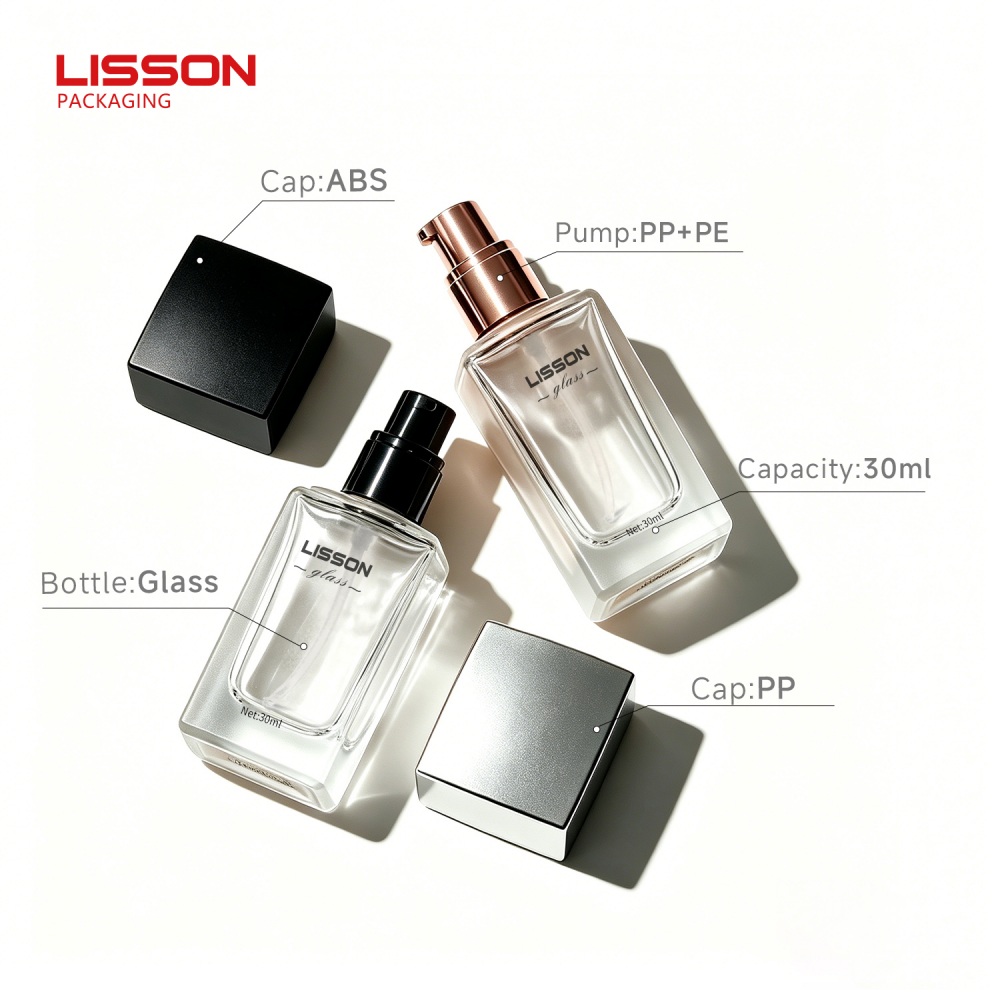
For pump bottles, check whether the pump primes correctly, dispenses a consistent amount, and returns to its original position after each press. For droppers, evaluate liquid pickup, dispensing control, and the integrity of the assembled cap and dropper components.
Useful functional checks include:
- Opening and closing performance over the expected usage cycle.
- Closure retention and resistance to unintended loosening.
- Pump priming and dispensing consistency.
- Dropper operation and liquid delivery.
- Changes in fit, sealing, or appearance after repeated use.
The number of cycles and acceptable performance range should be defined according to the closure type and product requirements. Different packaging mechanisms need different test methods; a pump should not be evaluated in exactly the same way as a simple screw cap.
For brands comparing pump packaging options, the 30ml flat-square glass lotion bottle with an 18mm pump system is one product configuration that can be reviewed when selecting packaging for liquid foundations, serums, and lotions. Final compatibility should be confirmed with the intended formula and actual samples.
How Do Brands Check Formula and Packaging Material Compatibility?
A bottle and closure may fit correctly and pass an initial leakage test but still be unsuitable for a particular cosmetic formula. Ingredients can interact with closure materials, liners, elastomers, coatings, or decorative finishes over time.
Formula compatibility testing evaluates whether the packaging maintains its intended performance and appearance during contact with the product. Depending on the formula, relevant concerns may include swelling, softening, cracking, discoloration, odor changes, coating deterioration, or changes in the seal.
A suitable evaluation may include:
- Storing filled samples under defined conditions for an agreed period.
- Evaluating samples at relevant temperature conditions.
- Inspecting the bottle, closure, liner, and decorative coating for visible changes.
- Checking whether the closure continues to seal and function correctly.
- Assessing the formula for relevant changes in appearance, odor, or other quality attributes.
The test plan should be based on the ingredients, expected shelf life, and intended storage conditions. Accelerated testing can help identify potential problems, but it should not automatically be treated as a complete substitute for appropriate long-term stability assessment.
LISSON's custom packaging service describes formula compatibility testing, vacuum leakage testing, thermal shock resistance, and neck-to-closure tolerance checks as part of its packaging quality approach. Brands should confirm the specific test scope, methods, and acceptance criteria required for their own projects.
How Do Brands Evaluate Packaging for Shipping and Storage?
Cosmetic packaging can experience vibration, impact, pressure changes, temperature variation, and repeated handling during distribution. A bottle and closure that pass a bench-top fit test may still need additional validation before shipment.
Transport testing should reflect the intended distribution route, packaging configuration, and shipping method. For example, the requirements for a parcel shipped directly to consumers may differ from those for palletized export shipments.
Depending on the project, the evaluation may include:
- Vibration or movement testing to identify loosening and leakage.
- Drop or impact testing of the packaged product where appropriate.
- Temperature conditioning to assess changes in formula flow and seal performance.
- Inspection of outer packaging and internal protection against glass breakage.
- Leakage and closure checks after transport simulation.
Testing should be performed on a representative, fully assembled shipping configuration rather than only on an empty bottle. The secondary packaging, inserts, dividers, and protective materials can affect how well the product survives transport.
What Should Be Included in a Bottle and Closure Compatibility Report?
A compatibility report helps purchasing teams, packaging suppliers, and quality managers understand what was tested and whether the packaging passed the agreed requirements.
A useful report should identify the components, test methods, conditions, results, and final decision. This information also makes it easier to investigate issues if a supplier changes a component or if a problem appears during production.
Include the following information:
- Sample identification: Bottle model, closure model, batch or lot reference, and component materials.
- Approved specifications: Relevant neck dimensions, closure dimensions, and tolerances.
- Test conditions: Formula used, filling level, assembly method, storage conditions, and test duration.
- Test results: Fit, leakage, opening and closing performance, dispensing behavior, and material compatibility observations.
- Acceptance criteria: The requirements used to determine whether the sample passed.
- Corrective actions: Any changes required before approval or mass production.
- Approval status: The final decision and identification of the approved packaging combination.
Keep the approved sample and its specifications as a reference for production. If the bottle, closure, formula, or assembly process changes, determine whether compatibility needs to be re-evaluated.
How Can Cosmetic Brands Reduce Compatibility Problems Before Mass Production?
The best way to reduce packaging compatibility problems is to involve the packaging supplier early and evaluate the bottle, closure, and formula as one system.
Before confirming a bulk order, cosmetic brands should:
- Share the intended formula, filling requirements, and distribution conditions.
- Confirm the bottle neck finish and closure specifications against technical drawings.
- Approve physical samples assembled with the intended closure components.
- Complete the relevant fit, leakage, functional, and formula compatibility tests.
- Confirm that the approved packaging can run on the planned filling and capping equipment.
- Document the approved component combination and change-control requirements.
For a new skincare range, a coordinated bottle and closure system can simplify supplier communication and help maintain consistent packaging across multiple products. LISSON offers glass cosmetic bottle and skincare cream jar set packaging for brands looking to develop coordinated packaging collections.
Compatibility testing is not just a final inspection step. It is part of packaging development, helping brands reduce avoidable production issues, protect product quality, and provide a more reliable user experience.
Frequently Asked Questions
How do cosmetic brands test bottle and closure compatibility?
Brands check dimensional fit, closure engagement, sealing performance, opening and closing behavior, formula compatibility, and transport performance. The specific tests depend on the bottle, closure type, formula, and distribution conditions.
Why can a cosmetic cap fit a bottle but still leak?
A cap may appear to fit while the thread engagement, liner, gasket, or sealing surface is incompatible. Dimensional checks and leakage tests using the intended package configuration help identify the cause.
Should compatibility testing use the actual cosmetic formula?
Whenever practical, testing should include the intended formula because viscosity, chemical composition, and temperature response can affect packaging performance. A substitute liquid may be useful for preliminary screening but may not represent all real-use conditions.
What is the difference between a fit test and a leakage test?
A fit test checks whether the closure engages correctly with the bottle. A leakage test checks whether the assembled package retains its contents under defined conditions. Passing one test does not automatically mean the package will pass the other.
How do brands test pump bottle compatibility?
They check neck fit, closure security, priming, dispensing consistency, leakage, and formula compatibility. The pump should also be evaluated with the intended formula and bottle geometry.
When should bottle and closure compatibility be tested?
Testing should begin during packaging development and be completed before mass production approval. Re-evaluation may be necessary when the formula, bottle, closure, supplier specification, or assembly process changes.
What should a packaging compatibility report include?
It should identify the bottle and closure, record the specifications and test conditions, document the results against agreed acceptance criteria, and state the approval decision and any required corrective actions.
Can LISSON help cosmetic brands develop compatible bottles and closures?
LISSON offers custom glass cosmetic packaging, including bottle, cap, pump, and dispensing component options. Brands can share their formula requirements, bottle specifications, and intended use to discuss a suitable packaging configuration and the relevant validation tests.