Quick Answer
High-performance skincare formulations require engineered packaging architecture to maintain chemical stability. The integration of multi-layer EVOH co-extrusion, precise pump rheology, and stringent manufacturing quality controls creates an impermeable environment that blocks oxygen transmission and prevents active ingredient degradation. Selecting the correct functional tube involves calculating formula viscosity, defining optimal dosage outputs, and aligning material barriers with product lifecycles.
Key Takeaways for Formulation Scientists and Brand Directors
- Standard mono-layer polyethylene (PE) tubes offer insufficient protection for reactive molecules like Vitamin C, Retinoids, and Peptides, necessitating multi-layer barrier technologies.
- Ethylene Vinyl Alcohol (EVOH) layers reduce the Oxygen Transmission Rate (OTR) by an order of magnitude compared to standard LDPE/HDPE blends.
- Pump actuator selection must be mathematically matched to the formula's specific gravity and viscosity (measured in centipoise) to prevent cavitation and ensure continuous dispensing.
- Advanced quality control protocols, including vacuum leak testing and burst pressure analysis, are non-negotiable for medical-grade cosmetic packaging lines.
The Intersection of Clinical Efficacy and Material Science
The cosmetic industry has transitioned from rudimentary moisturizers to highly bioactive compounds that mimic pharmaceutical topicals. This evolution in formulation chemistry demands an equal technological leap in packaging structural engineering. A highly potent serum formulated in a state-of-the-art laboratory rapidly loses its efficacy if housed in packaging that permits molecular gas exchange.
When developing next-generation SPF or active serums, formulating within sustainable cosmetic squeeze tube packaging requires a rigorous evaluation of the materials used in the extrusion process. The primary objective is to create a closed-loop system where the internal environment remains hermetically sealed against atmospheric pressure and bacterial pathogens from the moment of high-speed filling until the consumer extracts the final drop.
Polymeric Barriers: Understanding Oxygen Transmission Rates (OTR)
The fundamental metric for evaluating packaging integrity for active skincare is the Oxygen Transmission Rate (OTR). OTR measures the volume of oxygen gas passing through a defined area of the packaging material over a 24-hour period under controlled temperature and humidity conditions.
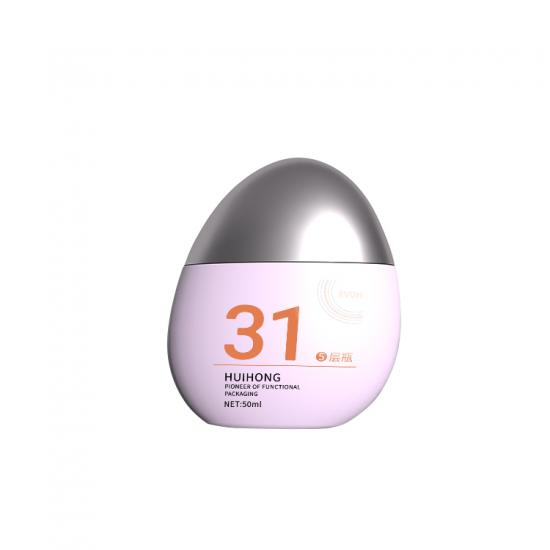
Mono-layer tubes, typically constructed from LDPE (Low-Density Polyethylene) or HDPE (High-Density Polyethylene), provide excellent moisture barriers but are highly permeable to oxygen. To engineer a secure tube body, manufacturers utilize a 5-layer co-extrusion process. This process sandwiches a core layer of EVOH between structural layers of PE, utilizing adhesive tie-layers to bind the incompatible polymers together. The crystalline structure of EVOH presents a nearly impenetrable barrier to oxygen, nitrogen, and carbon dioxide.
| Material Configuration | Standard Thickness (Microns) | OTR (cc/m²/24h) at 23°C | Ideal Formulation Use Case |
|---|---|---|---|
| Mono-layer LDPE | 400 - 450 | ~2000 - 2500 | Basic cleansers, inert lotions |
| 2-Layer HDPE/LDPE Blend | 400 - 500 | ~1500 - 1800 | Shampoos, body scrubs |
| 5-Layer Co-extruded (PE/Tie/EVOH/Tie/PE) | 450 - 500 (EVOH core: ~15-20) | < 1.0 | Vitamin C, Retinol, Botanical extracts |
| ABL (Aluminum Barrier Laminate) | Total: 250-300 (Alu foil: 12-20) | 0.00 (Absolute Barrier) | Pharmaceuticals, volatile ointments |
Advanced Dispensing Rheology: Matching Pump Architecture to Formula Viscosity
Packaging engineering extends beyond the tube body; the dispensing actuator operates as a complex hydraulic engine. The physical behavior of a cosmetic liquid—its viscosity, yield stress, and shear-thinning properties (collectively known as rheology)—dictates the exact mechanical specifications of the pump housing.
Low-viscosity serums (under 5,000 centipoise) require pumps with narrow orifices and highly sensitive internal check valves (often utilizing a glass or stainless-steel ball bearing) to prevent dripping and ensure a fine, controlled flow. Conversely, high-viscosity emulsions, such as physical sunscreens loaded with zinc oxide or heavy night creams (exceeding 50,000 centipoise), require a wider dip-tube diameter (if not airless), a heavy-duty internal spring with a higher compression force, and an enlarged dispensing channel to prevent formula shearing and pump clogging.
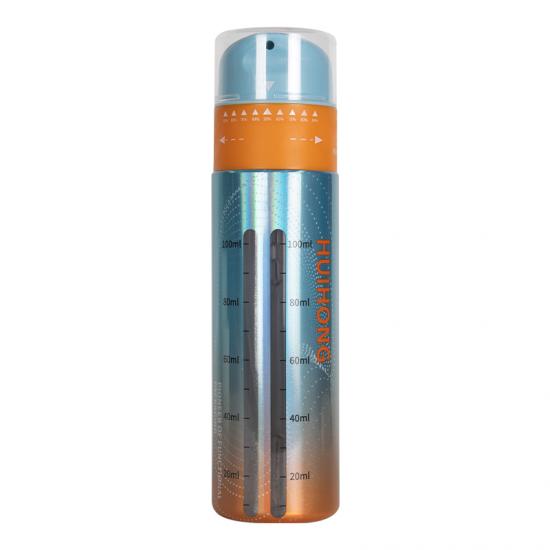
Sourcing wholesale airless pump skincare tubes allows brand procurement teams to access a wide matrix of pump configurations. In an airless system, as the actuator is pressed, a vacuum is drawn inside the chamber. An internal piston at the base of the tube moves upwards, pushing the formula out. If the pump torque is not precisely matched to the formula's specific gravity, the pump will either fail to draw the heavy liquid upward (cavitation) or dispense it with too much velocity, leading to user dissatisfaction.
Scalability and Procurement Economics
Transitioning from standard open-jar configurations to advanced functional mechanisms introduces distinct variables into a brand's unit economics. While the initial component cost of a multi-layer airless tube is higher than a basic jar, the long-term economic advantages manifest in extended product shelf-life, reduced spoilage during transit, and significantly lowered formulation overage requirements.
| Economic Variable | Standard Packaging Model | Functional Airless Tube Model | Net Business Impact |
|---|---|---|---|
| Active Ingredient Overage | High (Formulating 20% extra active to offset oxidation) | Low (Formulating exact percentages due to stability) | Significant raw material cost reduction |
| Preservative Loading | Heavy (Requires broad-spectrum parabens/phenoxyethanol) | Minimal (Closed system blocks microbial entry) | Enables "Clean Beauty" / "Preservative-Free" claims |
| Returns / Spoilage Rates | Moderate (Formula discoloration, scent degradation) | Near Zero (Total environmental isolation) | Higher customer retention, fewer retail chargebacks |
Decorating Technologies: Communicating Clinical Authority
The tactile and visual aesthetic of a product directly translates into its perceived clinical efficacy. Medical-grade packaging utilizes specific surface treatments to communicate sterility, precision, and high-end value. Standard offset printing, while cost-effective for mass-market brands, lacks the dimension required for premium skincare.
Advanced facilities employ silk-screen printing to lay down thick, raised layers of UV-cured ink, creating a tactile reading experience on the tube surface. Hot foil stamping (applying metallic foils under heat and pressure) is utilized for branding accents, adding a reflective contrast against matte backgrounds. The application of soft-touch varnishes alters the molecular surface of the plastic, shifting the physical sensation from cheap polymer to a high-friction, velvet-like grip, which is highly favored in dermatological settings.
Rigorous Quality Assurance Protocols in Tube Extrusion
The integrity of functional packaging is only guaranteed through aggressive physical stress testing. A micro-fracture in the tube seal or a misaligned pump thread immediately compromises the entire formulation. Factory QA protocols simulate the harshest conditions of global shipping and consumer abuse.
| QA Test Protocol | Methodology | Purpose in Clinical Packaging |
|---|---|---|
| Vacuum Leak Test | Tubes are submerged in water inside a vacuum chamber. Negative pressure is applied to observe air bubbles. | Ensures the tail seal and pump thread are 100% hermetic and secure against altitude pressure changes during air freight. |
| Burst Pressure Test | Air is injected into a sealed tube until structural failure occurs. The maximum pressure threshold is recorded. | Guarantees the tube wall thickness is uniform and the tail seal can withstand heavy consumer squeezing or impact. |
| Torque Measurement | A dynamometer measures the rotational force required to apply and remove the pump head. | Prevents mechanical loosening during transit while ensuring the consumer can operate the cap without extreme effort. |
| Compatibility Testing | Tubes are filled with the actual chemical formula and baked in ovens at 45°C for up to 12 weeks. | Checks for plasticizer leaching, color bleeding, structural warping, or chemical degradation of the internal PE layer. |
Supply Chain Consolidation and Vendor Integration
Fragmented procurement—buying tube bodies from one supplier, pumps from another, and caps from a third—introduces catastrophic margin for error. A variance of 0.1 millimeters between the tube neck thread and the pump housing will result in micro-leaks, leading to complete formula oxidation on the retail shelf.
Establishing a direct partnership with a premium cosmetic packaging manufacturer China eliminates these integration risks. Vertical integration within a single manufacturing facility means that the extrusion machines, injection molding units, and decoration lines operate under a unified, ISO-certified Quality Management System (QMS). When the manufacturer controls the precise tooling for both the vessel and the dispensing mechanism, brands achieve zero-defect tolerances, rapid prototyping capabilities, and a streamlined path from initial CAD design to mass production.
Technical FAQ
How do Post-Consumer Recycled (PCR) resins affect the barrier properties of cosmetic tubes?
Standard PCR materials can contain microscopic impurities that weaken structural integrity and alter OTR. To solve this, manufacturers use a multi-layer technique where the PCR plastic is strictly confined to the middle or outer layers of the tube. The inner layer, which makes direct contact with the formula, is always extruded from virgin PE, ensuring that the chemical barrier remains uncompromised while meeting sustainability targets.
What is the difference between ABL (Aluminum Barrier Laminate) and EVOH tubes?
ABL tubes contain a thin, physical sheet of aluminum foil within the plastic layers, providing an absolute zero-transmission barrier against light, air, and moisture. They are often used for highly reactive pharmaceuticals. EVOH is a clear plastic resin that acts as an excellent gas barrier. EVOH allows the tube to maintain memory (bouncing back to its original shape after squeezing), whereas ABL tubes tend to stay dented or wrinkled.
Can a standard pump head be mounted on any tube diameter?
No. Pump housings are engineered for exact neck dimensions (e.g., 15mm, 18mm, 24mm threads). The diameter of the tube body (ranging from 16mm for eye creams to 50mm for body lotions) dictates the neck mold. The pump must be precisely matched to the thread profile and the torque specifications of the specific tube neck to ensure a hermetic seal.
What causes a pump tube to dispense unevenly or sputter?
Sputtering typically occurs due to air pockets trapped in the liquid during the factory filling process. In airless pump systems, sputtering can also happen if the formula's viscosity is too high for the pump's actuator channel, creating a vacuum lock where the internal piston struggles to rise smoothly against the dense formula.
Why is hot foil stamping preferred over standard metallic inks?
Metallic inks contain metal flakes suspended in a carrier fluid, which often results in a dull, greyish finish once dried. Hot foil stamping uses heat to transfer actual microscopic layers of aluminum film directly onto the plastic substrate. This creates a true, mirror-like metallic reflection that is highly resistant to scratching and chemical degradation from the skincare product itself.